
Why Jeffrey Epstein loved Russia: women, oligarchs and a shot at redemption
A Reuters investigation has examined Jeffrey Epstein's connections to Russia, revealing how he used modelling networks to recruit young Russian women and girls while cultivating relationships with wealthy businessmen and influential officials. The investigation identified at least 17 women from the former Soviet Union who were drawn into his sex-trafficking network. It also examined his efforts to establish connections with Russian oligarchs and senior officials, including attempts to secure a meeting with President Vladimir Putin. Reuters found no evidence that Epstein worked for Russian intelligence, represented the Russian government or succeeded in meeting Putin.
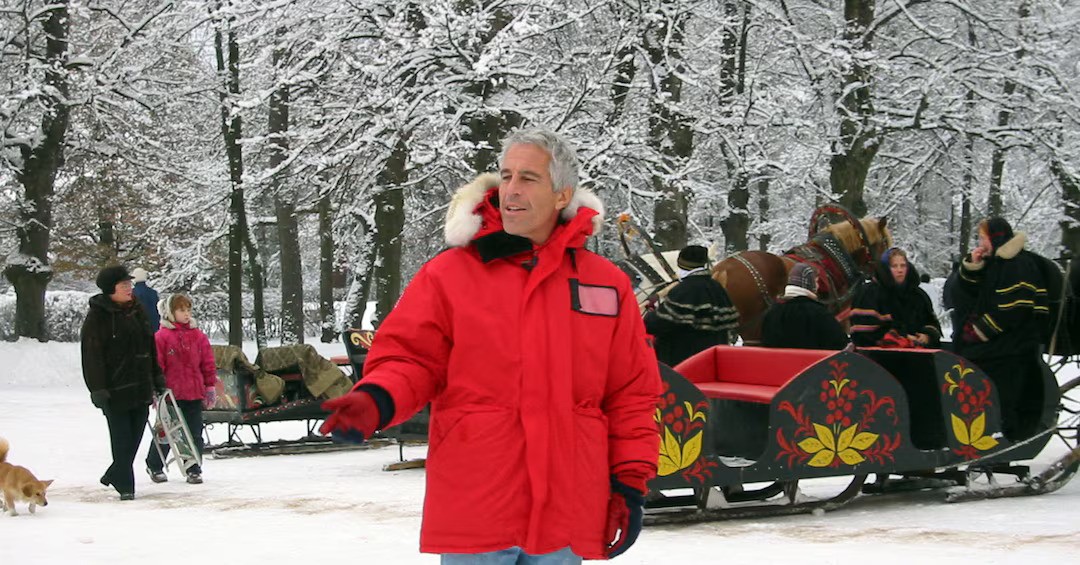
A Reuters investigation has revealed the extent of Jeffrey Epstein's connections to Russia, examining how the convicted American sex offender used modelling networks to recruit young women and girls while attempting to establish relationships with wealthy Russian businessmen and senior government officials.
The investigation found that Russia became one of Epstein's principal recruitment grounds. Reuters identified at least 17 women from the former Soviet Union who were drawn into his sex-trafficking network, including three women who have sought justice for abuse and exploitation.
Epstein's interest in Russia extended beyond recruiting women. Following his 2008 conviction in Florida for prostitution-related offences, including soliciting an underage girl, he increasingly attempted to rebuild his reputation by cultivating relationships with Russian oligarchs, businessmen and influential officials.
Epstein's visits to Russia
Epstein made two known trips to Russia. His first visit took place in April 1998, when he travelled to Sarov, a formerly secretive city associated with the Soviet Union's nuclear weapons programme.
His second known visit occurred in November 2002. He travelled to Russia aboard his private jet with British socialite Ghislaine Maxwell and French modelling scout Jean-Luc Brunel.
During a stop in Moscow, the group met wealthy Chechen businessman Umar Dzhabrailov before travelling to St. Petersburg. Epstein was reportedly interested in visiting the famous Mauve Room inside the Alexander Palace after an interior designer recommended it as inspiration for his Manhattan townhouse.
The trip also highlighted Epstein's growing interest in Russian society and influential individuals.
Russian women and modelling networks
Following the collapse of the Soviet Union, international modelling agencies expanded their recruitment activities across Eastern Europe and the former Soviet Union.
French modelling scout Jean-Luc Brunel was among those searching for new talent. Working through modelling agencies, he recruited young women and girls and brought them to Paris, where agencies selected models for international markets.
Reuters examined how these networks became connected to Epstein.
One former model, Thysia Huisman, recalled encountering a young Russian girl at a party organised by Brunel in Paris in September 1991. She said the girl appeared to be in her early teens and spent much of the evening with Epstein.
Huisman later recalled the girl saying that Epstein took care of her. Reuters noted that it could not independently confirm the party or the identity and age of the girl.
Epstein also maintained connections with Russian models through international beauty pageants and modelling agencies. Among the women identified in the investigation was Anna Malova, a former Miss Russia runner-up who later entered the American modelling industry.
The Russian recruitment pipeline
In 2003, Brunel established a Miami modelling agency called Karin Models of America, which was renamed MC2 Models Management in 2005.
The agency recruited extensively in Russia and helped Russian models obtain documents to travel to the United States. According to people familiar with its operations, Epstein provided accommodation for some of the women and financially supported the agency.
One of the women recruited through MC2 was Svetlana Pozhidaeva. She told Reuters that she met Epstein in Paris in 2008 and moved to the United States the following year after he promised to help her obtain a modelling contract with Victoria's Secret.
Pozhidaeva subsequently became one of Epstein's personal assistants. She described experiencing sexual abuse, financial dependence and pressure concerning her appearance.
She also said she feared that Epstein's perceived political connections, including possible influence in Russia, could put her or her family at risk if she attempted to leave.
Reuters also found that at least nine women from the former Soviet Union recommended friends or acquaintances to Epstein during the final decade of his life.
Attempts to cultivate Russian oligarchs and officials
After his conviction, Epstein increasingly sought to associate himself with influential Russian businessmen and political figures.
Among his contacts was real-estate billionaire Vladislav Doronin, who was then in a relationship with British supermodel Naomi Campbell.
Emails showed that Doronin's office invited Epstein to a Moscow charity event in 2010. Although Epstein did not attend, the two later met for dinner at his Manhattan townhouse, where they discussed a multimillion-dollar real-estate project in Moscow.
Epstein also attempted to establish contact with metals billionaire Oleg Deripaska. However, Reuters could not determine whether the two men ever met.
His ambitions extended to the highest levels of Russian political leadership.
In 2011, Epstein was reportedly planning another visit to Russia, with emails suggesting that his Russian bodyguard had mentioned an appointment with President Vladimir Putin. The trip was eventually cancelled, and people familiar with the arrangements questioned whether a meeting with Putin had ever been scheduled.
The connection with Sergey Belyakov
In 2014, Epstein met Sergey Belyakov, a former Russian deputy economy minister and organiser of the St. Petersburg International Economic Forum.
Belyakov subsequently became one of Epstein's principal points of contact within Russian official circles.
Emails reviewed by Reuters showed that Epstein introduced Belyakov to former Israeli prime minister Ehud Barak during a dinner in New York in April 2015.
Epstein later encouraged Barak to send Belyakov a message explaining that Putin and his advisers could benefit from meeting him to discuss international financial markets, currencies and the global financial system.
Barak did not forward the proposed message, according to a person familiar with the matter.
Epstein also attempted to use other intermediaries, including former British cabinet minister Peter Mandelson, to arrange contact with Putin. These efforts apparently produced no meeting.
Connections involving Sultan Ahmed Bin Sulayem
Another important relationship involved Emirati businessman Sultan Ahmed Bin Sulayem, the longtime chairman of international logistics company DP World.
Their relationship dated back to at least 2005, according to documents examined by Reuters.
In September 2015, Bin Sulayem travelled to Russia to meet Putin and discuss opportunities involving the management of Russian ports.
During this period, Epstein also asked the businessman to help find employment for the brother of his assistant, Svetlana Pozhidaeva.
Bin Sulayem later resigned from DP World after his relationship with Epstein became public.
Unanswered questions about Epstein's Russian connections
Despite his efforts to establish relationships with influential Russian figures, Epstein did not secure the political influence or major business opportunities he appeared to seek.
Reuters interviewed more than two dozen people familiar with his Russian connections, including nine who knew him personally. The investigation also examined hundreds of pages of US Justice Department records, flight logs, court documents and emails.
The investigation found no evidence that Epstein worked for Russian intelligence, acted on behalf of the Russian government or successfully met Vladimir Putin.
Nevertheless, questions surrounding his international connections remain a subject of public interest and investigations.
Several important figures connected to Epstein's Russian network have died. Epstein died in a Manhattan jail in August 2019, while Brunel died in a Paris prison in 2022. Umar Dzhabrailov was found with a fatal gunshot wound in his Moscow apartment in March 2026. Russian state media reported that police sources described his death as a suspected suicide.
Relatives of Epstein and Dzhabrailov have disputed the suicide assessments, although no conclusive evidence of foul play has emerged.
The investigation concludes that Epstein's Russian connections left behind a network of relationships involving wealthy businessmen, modelling agencies and influential individuals, while many of the women affected by his abuse continue to seek accountability.
Source: .reuters.com
What's Your Reaction?
 Like
0
 Dislike
0
 Love
0
 Funny
0
 Wow
0
 Sad
0
 Angry
0

Related Posts



-
 Kinguiranke
(119)
-
Nfp
(47)
-
Kankan
(42)
-
Kan
(36)
-
Coulibaly Yacouba
(24)



Comments (0)