
ADF Attacks Kill at Least 35 Civilians in DR Congo’s Ebola-Hit Ituri Province
At least 35 civilians have been killed in suspected Allied Democratic Forces attacks in Mambasa territory, northeastern DR Congo, as insecurity threatens humanitarian access in an Ebola-affected region. Fourteen people are reported missing, while further casualties remain unconfirmed.
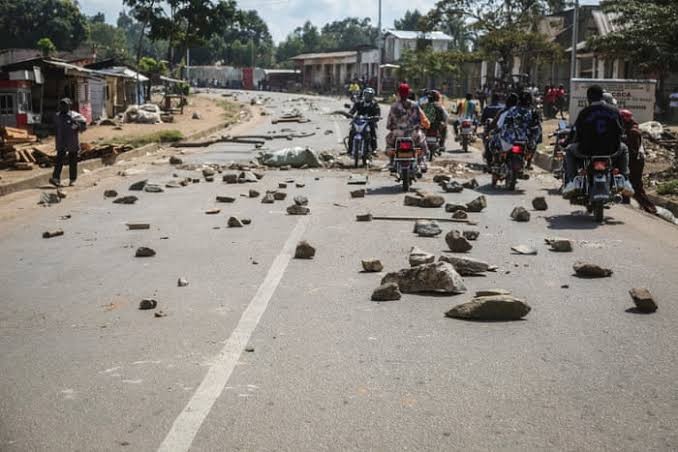
At Least 35 Civilians Killed in Attacks in Ituri
At least 35 civilians have been killed in a series of armed attacks in Mambasa territory, northeastern Democratic Republic of the Congo (DR Congo), according to local authorities. The attacks, attributed to the Allied Democratic Forces (ADF), have also left 14 people missing and caused widespread destruction in several communities.
The violence took place in the Babila Babombi chiefdom of Ituri province, an area already facing serious humanitarian challenges amid an ongoing Ebola outbreak.
According to an updated assessment released on Friday, November 13, the death toll increased from an initial 22 as residents and local officials discovered additional bodies. Several affected villages remain difficult to access, meaning the number of casualties could rise further.
The attacks have heightened concerns about civilian protection and the ability of humanitarian organisations to operate in a region struggling with both armed violence and a public health emergency.
Multiple Villages Targeted in Mambasa Territory
The main attacks occurred on Wednesday, November 11, when armed men struck the villages of Mingazi, Amani, Lelesi and Mitume in the Babila Babombi chiefdom.
At least 12 people were initially reported killed during the assault. However, the toll increased as additional bodies were recovered over the following two days.
Local authorities reported that at least 35 civilians had been killed by November 13. Fourteen people were also reported missing, while 12 houses and nine motorcycles were burned during the violence.
Further attacks were reported on Thursday, November 12, in Dondola, Makembise and Kisangani camp. The number of casualties from these incidents remained unknown because security conditions prevented access to the affected locations.
The continuing difficulty of reaching several communities has complicated efforts to establish the full scale of the violence.
ADF Blamed as Residents Demand Stronger Security
Local authorities and human rights activists have attributed the attacks to the Allied Democratic Forces, an armed group operating in eastern DR Congo that has pledged allegiance to the Islamic State.
The incidents have renewed concerns about the limited security presence in parts of Mambasa territory. Residents and traditional leaders have called on the Congolese security forces to strengthen their deployment and improve protection for vulnerable communities.
The administrator of Mambasa territory said military operations were under way to pursue the armed groups responsible for the attacks.
However, no official statement from the military command or claim of responsibility from the ADF was available at the time of reporting.
The final casualty figures also remain uncertain, particularly for communities that security personnel and humanitarian workers have not yet been able to reach.
Violence Complicates the Ebola Response in Ituri
The attacks come at a particularly difficult time for Ituri province, which remains the worst-affected region in DR Congo's ongoing Ebola outbreak.
The European Centre for Disease Prevention and Control (ECDC), in its November 13 update using data available through November 12, reported 11,197 confirmed Ebola cases and 5,471 related deaths across the country. The outbreak has affected eight provinces.
Ituri accounted for 7,765 confirmed cases and 3,667 deaths, with infections reported across 28 of the province's 36 health zones.
The outbreak is caused by the Bundibugyo virus, one of the species responsible for Ebola disease. The ECDC has warned that insecurity and humanitarian difficulties are limiting the collection of epidemiological information, making it harder to identify transmission chains and understand the full extent of the outbreak.
Attacks in communities already facing health emergencies can further complicate disease surveillance, contact tracing and access to medical treatment.
When residents are forced to flee their homes, health workers may also struggle to locate patients and monitor people who have been in contact with confirmed cases.
Earlier Attack in North Kivu Raised Similar Concerns
The latest violence follows another deadly attack in Cantine-Aloya, in Beni territory, North Kivu province, on November 5.
The incident reportedly involved an attack on civilians and a health facility, raising concerns about the safety of patients and medical personnel.
In a statement issued on November 8, the Africa Centres for Disease Control and Prevention (Africa CDC) condemned the violence and warned that attacks on health facilities and the displacement of patients were creating serious risks for the Ebola response.
The organisation said hundreds of people with confirmed or suspected Ebola infections had fled in search of safety following the incident.
Africa CDC called for a humanitarian corridor to protect civilians, patients, healthcare workers and medical facilities, stressing that essential health services must continue without fear of violence.
Local civil society representative Justin Paluku reported counting 33 bodies following the Cantine-Aloya attack. That figure was a local count rather than an officially confirmed casualty total.
Civilian Protection and Humanitarian Access Remain Critical
The attacks in Ituri highlight the overlapping security and public health challenges facing eastern DR Congo.
For communities in Mambasa territory, the immediate concerns include the recovery of missing residents, access to affected villages and protection against further attacks.
The violence also threatens efforts to contain Ebola in an area where health authorities are already facing difficulties collecting reliable information and maintaining access to vulnerable populations.
As of November 13, the death toll from the Mambasa attacks remained provisional, with further information expected as authorities gain access to affected communities.
The ability of security forces and humanitarian organisations to reach these areas will be crucial to establishing the full extent of the casualties and ensuring that residents receive the protection and medical assistance they need.
What's Your Reaction?
 Like
0
 Dislike
0
 Love
0
 Funny
0
 Wow
0
 Sad
0
 Angry
0

Related Posts



-
 Kinguiranke
(103)
-
Nfp
(55)
-
Kankan
(33)
-
Citoyen du monde
(31)
-
Coulibaly Yacouba
(27)


Comments (0)