
DR Congo’s Rival Peace Efforts Fail to Halt Violence in the East
Rival diplomatic initiatives led by the United States and Qatar have failed to stop renewed fighting in eastern Democratic Republic of the Congo, where clashes between government forces and the Front for the Refoundation of the Nation (FRN) continue to threaten civilians. Despite peace agreements and negotiations, insecurity, displacement and disruptions to essential services persist in North and South Kivu. The African Union has called for better coordination between peace initiatives and more inclusive political dialogue.
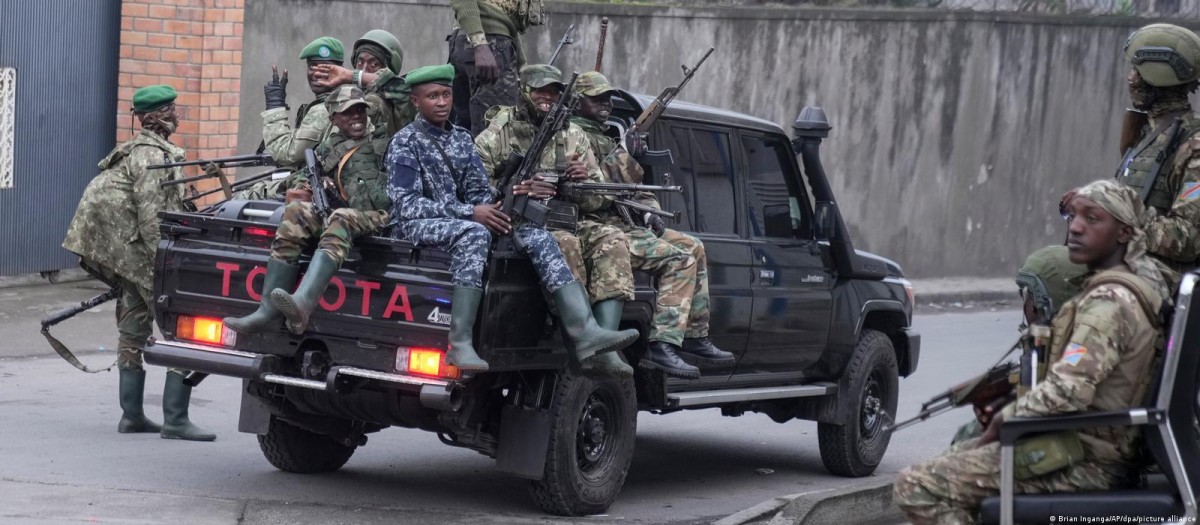
Diplomatic initiatives aimed at ending the conflict in eastern Democratic Republic of the Congo have failed to stop renewed fighting, leaving civilians in North and South Kivu exposed to violence, displacement and disruptions to essential services.
The latest escalation involves fighting between the Congolese army and the Front for the Refoundation of the Nation (FRN), an armed and political coalition led by former President Joseph Kabila. Despite separate peace efforts in Washington and Doha, insecurity continues to affect communities across the region.
The Washington Accords, signed in December 2025, address tensions between the Democratic Republic of the Congo and neighbouring Rwanda. Meanwhile, the Doha process seeks to resolve the confrontation between the Congolese government and the Congo River Alliance (AFC), which includes the Rwanda-backed M23 armed group.
The Doha Framework for a Comprehensive Peace Agreement was signed in November 2025. Further negotiations in August 2026 produced a roadmap intended to advance the process. However, fighting has continued.
In early November, FRN fighters advanced through Kahuzi-Biega National Park and along National Road 3, a strategic route connecting Bukavu with areas farther north. Conflict monitoring reports indicated that fighters captured several localities, including Bitale and the centre of Bulambika on November 8. The Congolese army said it had halted the advance at Bulambika and was preparing a counteroffensive.
The fighting has increased pressure on communities already affected by years of conflict. Doctors Without Borders (MSF) reported reducing its staff presence in the Bunyakiri health zone, relocating some personnel to Bitale and Bukavu because of deteriorating security conditions.
The African Union has also expressed concern about limited implementation of commitments under the Washington and Doha peace processes. In its October 26 communiqué, the organisation called for better coordination between diplomatic initiatives and an inclusive, nationally owned dialogue involving women, young people and civil society.
Civil society representatives and residents have questioned whether negotiations involving governments and armed groups are addressing the needs of ordinary Congolese. They have called for broader political dialogue that tackles the underlying causes of the conflict, including local disputes, weak state institutions and impunity.
For civilians in eastern Congo, meaningful progress will depend on whether fighting stops, essential services remain accessible and displaced families can safely return home.
What's Your Reaction?
 Like
0
 Dislike
0
 Love
0
 Funny
0
 Wow
0
 Sad
0
 Angry
0

Related Posts



-
 Kinguiranke
(104)
-
Nfp
(49)
-
Citoyen du monde
(30)
-
Coulibaly Yacouba
(28)
-
kan
(26)



Comments (0)