
The U.S.-China Endgame on AI - How to Avoid a Tech-Fueled Catastrophe
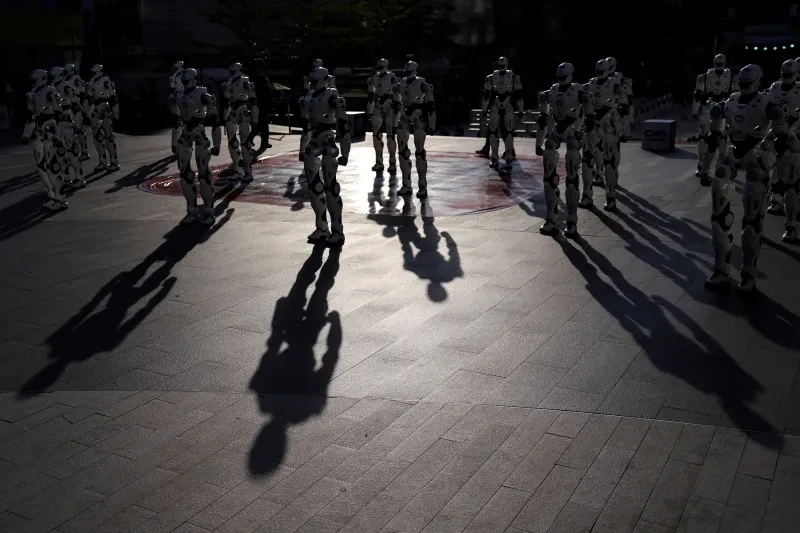
Time may be running out for the United States and China to avert an artificial intelligence crisis. Many of the researchers and engineers building the world’s most powerful frontier AI models believe they may be only a year or two away from achieving recursive self-improvement—the ability of AI systems to build smarter versions of themselves. Once that threshold is crossed, models could quickly develop beyond human control. Although the potential timeline and consequences of recursive self-improvement are hotly debated, any U.S. strategy on AI must take seriously the possibility that its arrival could be imminent.
But in Washington, concerns about the dangers of a near-term “intelligence explosion” are colliding with the geopolitical reality that the United States is locked in a fierce AI race with China. Many policymakers oppose more regulation because they fear it will cause the United States to fall behind. Indeed, many frontier labs continue accelerating the automation of AI development, despite warnings by their own employees that slowing down the pace of progress might be necessary to make the technology safe.
The United States urgently needs a strategy to navigate this dilemma. Yet national security experts, AI researchers, and elected officials fundamentally disagree about what Washington should seek to achieve and how to manage competition with Beijing.
Thus far, three competing visions have emerged. The first seeks a full U.S. victory, or what is often called decisive strategic advantage, over China. Proponents of this perspective believe that the U.S.-Chinese AI race has a finish line: the achievement of artificial superintelligence, or AI with capabilities that far exceed those of humans across nearly all domains. In this worldview, safety is best achieved through dominance, and the United States needs to win the AI race to be able to impose necessary safeguards around the world. A second vision, which we call “AI safety in parallel,” recognizes the need for risk mitigation but proposes that much of this can happen independently on each side. Thus, both China and the United States should pursue their own safety measures—and share best practices with each other—while they continue to compete to advance the technology. A third view argues that AI safety can only be assured by institutionalized cooperation between the United States and China. In this vision, the two countries need a binding international treaty to constrain dangerous AI development.
Source: https://www.foreignaffairs.com/ - 27.11.2026
What's Your Reaction?
 Like
0
 Dislike
0
 Love
0
 Funny
0
 Wow
0
 Sad
0
 Angry
0

Related Posts



-
 Kinguiranke
(122)
-
Nfp
(48)
-
kan
(45)
-
Kankan
(38)
-
Citoyen du monde
(26)






Comments (0)