
COP31: EU Faces Growing Isolation as Climate Finance Disputes Complicate Negotiations
European countries are facing mounting diplomatic challenges at COP31 in Antalya as disagreements over climate finance, declining political support and strained relationships with developing nations complicate efforts to secure ambitious global climate agreements.
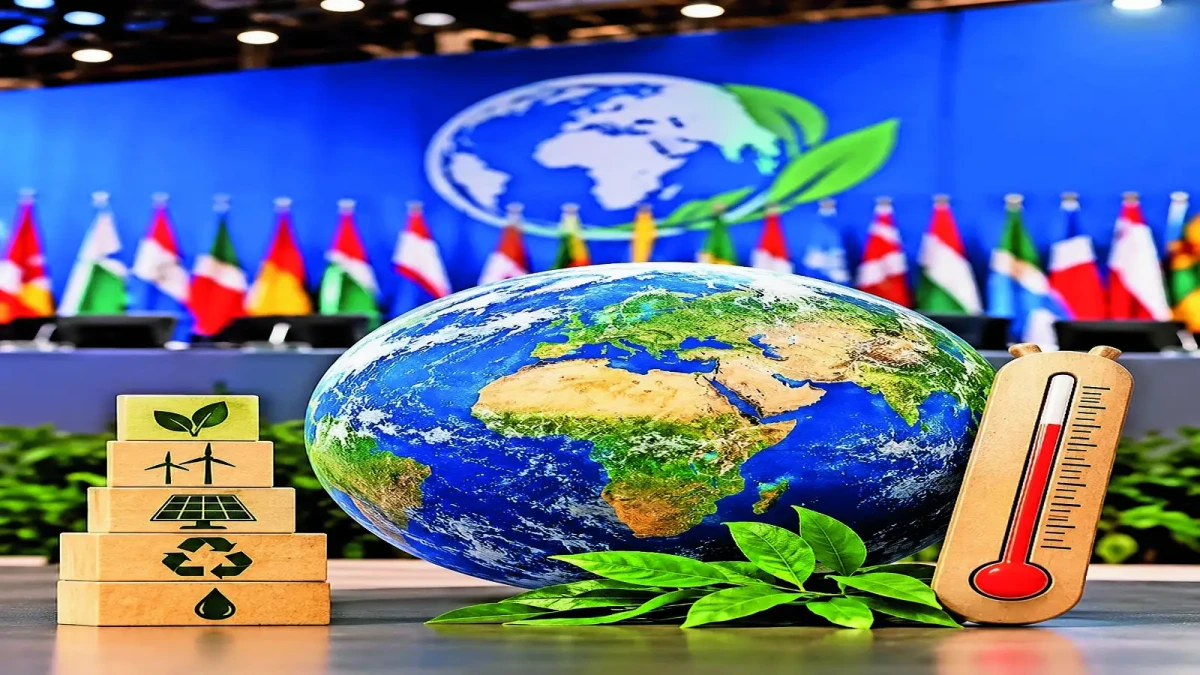
European countries are facing growing diplomatic challenges at the COP31 climate summit in Antalya, Türkiye, as disagreements over climate financing, weakening international alliances and domestic political pressures complicate efforts to advance global climate action.
The European Union, traditionally one of the strongest advocates of ambitious climate policies, is increasingly finding itself isolated in negotiations involving developed and developing countries.
The summit, which began on November 9 and runs until November 20, has brought together representatives from nearly 200 countries to discuss ways of implementing the Paris Agreement and strengthening international responses to climate change.
French President Emmanuel Macron is among several European leaders absent from the World Leaders Summit on November 11 and 12. European Commission President Ursula von der Leyen is representing the bloc's priorities as negotiations unfold.
European Union Struggles to Build International Alliances
The EU's difficult negotiating position reflects growing divisions between developed and developing countries, alongside the reduced participation of major international players.
Following the United States' withdrawal from the Paris Agreement in 2025, European countries have faced additional pressure to represent the interests of developed nations in international climate discussions.
Although the EU coordinates its position through its 27 member states, developing countries frequently present more unified positions on issues affecting their economies and populations.
European governments have traditionally sought partnerships with African countries, small island states and other nations particularly vulnerable to climate change. However, shared environmental concerns have not always translated into agreement on financial priorities.
For many developing countries, securing accessible and predictable funding for climate adaptation, emissions reduction and compensation for climate-related losses remains a central negotiating priority.
Paul Watkinson, a former head of France's climate negotiating team, has highlighted the importance of understanding these priorities rather than assuming vulnerable countries will automatically support European positions.
Ahead of COP31, French Environment Minister Monique Barbut travelled to Tuvalu and Fiji to participate in preparatory discussions and strengthen relationships with Pacific island nations.
European negotiators are also being encouraged to expand diplomatic engagement beyond their traditional partners to improve their chances of building broader international coalitions.
Climate Finance Remains a Major Point of Contention
Financing is emerging as one of the most difficult issues facing negotiators in Antalya.
Developing countries have repeatedly called for greater financial assistance to address the consequences of climate change, particularly in communities experiencing rising temperatures, extreme weather events, flooding and other environmental threats.
The EU maintains a significant role in international climate financing. According to official European figures, the bloc and its 27 member states contributed €32.3 billion in public climate finance in 2025, while mobilising an additional €9.3 billion in private financing to support developing countries.
However, European contributions have not eliminated concerns about the substantial funding gap facing vulnerable nations.
The EU wants to improve access to existing climate funds and encourage more countries to contribute to international financing efforts. At the same time, European representatives have ruled out taking on additional financial commitments.
This position could complicate negotiations, particularly as African countries seek stronger guarantees on adaptation funding.
On the opening day of COP31, African countries attempted to add adaptation finance to the conference agenda but were unsuccessful.
Questions also remain about the implementation of the commitment made at COP30 in Brazil to triple adaptation financing by 2035.
Developed countries have yet to provide sufficient clarity about how quickly they will meet other international climate finance targets agreed in 2024.
Selma Huart, a climate inequality advocacy officer at Oxfam France, has criticised the lack of clarity surrounding France's future contributions, arguing that previous financial commitments also require a credible implementation plan.
French Environment Minister Monique Barbut is expected to play an important role in the negotiations because of her involvement in facilitating discussions on climate finance.
Europe's Climate Leadership Faces Domestic Challenges
Despite its international climate ambitions, the EU is also confronting growing difficulties in maintaining its environmental policies at home.
The bloc has reduced its greenhouse gas emissions by 39% since 1990, according to the European Commission. It has also committed to cutting net emissions by 90% by 2040 as part of its longer-term climate strategy.
However, the pace of emissions reductions has slowed. European Commission figures show that net greenhouse gas emissions fell by 1.6% in 2025, compared with a 2.5% reduction in 2024.
The bloc must therefore accelerate its efforts to remain on track with its climate targets.
Political resistance, economic competitiveness concerns and budgetary pressures are also influencing European environmental policymaking.
The implementation of certain methane regulations has faced delays, while plans for a European carbon market covering transport and buildings have encountered political opposition.
Carola Kloeck, an associate professor at Sciences Po's Center for International Studies, has pointed to the increasingly complicated domestic political environment, including the rise of far-right climate scepticism and competing government spending priorities.
European climate partners are also concerned that governments are increasingly prioritising defence and economic competitiveness over environmental cooperation.
Absence of European Leaders Raises Questions
The absence of several prominent European leaders from the COP31 World Leaders Summit has added to concerns about the continent's political commitment to international climate diplomacy.
Macron, alongside the leaders of Germany, Italy and Denmark, is not attending the high-level gathering.
Climate Action Network International has described the absence of major European leaders as a worrying signal for international climate cooperation.
The summit is taking place against a broader backdrop of geopolitical tensions and weakening international consensus on climate action.
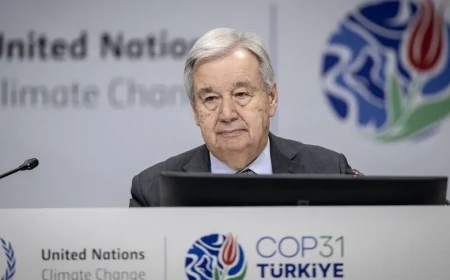
On November 11, United Nations Secretary-General António Guterres urged world leaders not to allow wars and trade disputes to distract them from addressing global warming.
He warned that the international response to climate change remained inadequate, while negotiators continued discussions on accelerating the transition towards cleaner energy.
Brazilian President Luiz Inácio Lula da Silva and Turkish President Recep Tayyip Erdoğan also called for stronger international cooperation.
The United States, meanwhile, is staying away from the negotiations for the second consecutive year, further complicating efforts to secure a unified international response.
COP31 Tests Europe's Diplomatic Strategy
European officials say they have learned important lessons from the difficulties encountered during COP30 in Belém, Brazil.
France has sought to strengthen diplomatic contacts with potential partners, improve coordination among European countries and prepare more effectively for negotiations.
The European Commission is also emphasising the importance of maintaining climate ambitions while encouraging other countries to fulfil their commitments.
However, the outcome of COP31 will depend on whether European representatives can translate these diplomatic efforts into agreements that address the priorities of developing countries.
With climate financing, adaptation and the transition away from fossil fuels remaining central points of disagreement, the Antalya negotiations represent an important test of Europe's influence in international climate diplomacy.
The challenge for the EU is not simply to defend its environmental achievements, but to convince a wider range of countries that its approach can deliver meaningful progress for both developed and developing economies.
What's Your Reaction?
 Like
0
 Dislike
0
 Love
0
 Funny
0
 Wow
0
 Sad
0
 Angry
0

Related Posts


-
 Kinguiranke
(103)
-
Nfp
(55)
-
Kankan
(33)
-
Citoyen du monde
(31)
-
Coulibaly Yacouba
(27)

Comments (0)