
Zelenskiy Says US Floated Ukraine Giving Up Donbas in Exchange for NATO Membership
Ukrainian President Volodymyr Zelenskiy says US negotiators raised the possibility of Ukraine withdrawing from the Donbas region in exchange for NATO membership during recent peace discussions. Zelenskiy rejected territorial concessions but said he could put the proposal to a national referendum if Ukraine received comprehensive security guarantees, military support and reconstruction funding.
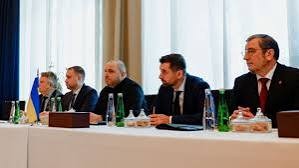
Zelenskiy Says US Raised Possible Donbas Withdrawal in Exchange for NATO Membership
Ukrainian President Volodymyr Zelenskiy has revealed that American negotiators raised the possibility of Ukraine withdrawing from the eastern Donbas region in exchange for membership in the North Atlantic Treaty Organization (NATO), introducing a new and sensitive issue into ongoing efforts to negotiate an end to Russia's war against Ukraine.
Zelenskiy made the disclosure on November 14, following the latest round of US-mediated negotiations between Ukrainian and Russian representatives in Abu Dhabi, United Arab Emirates. According to the Ukrainian president, the question of linking NATO membership with territorial concessions had not previously been raised during the discussions.
Speaking about the proposal, Zelenskiy said American representatives had asked whether Ukraine would withdraw from Donbas if it were allowed to join NATO.
He described the possibility as an extremely difficult issue, particularly given Russia's longstanding opposition to Ukraine becoming a member of the Western military alliance.
Ukraine Not Ready to Give Up Its Territory
Zelenskiy reiterated that Ukraine was not prepared to voluntarily surrender its territory. However, he indicated that a comprehensive agreement involving substantial international security commitments could be presented to Ukrainian citizens for a national referendum.
He said such an arrangement would need to include credible security guarantees, the right for Ukraine to maintain a strong and adequately funded military, and financial assistance for rebuilding the country after the war.
The president stressed that he could not make such a significant decision independently and would want the Ukrainian population to have a say if sufficiently detailed guarantees were offered.
The proposal also raises questions about whether NATO membership could realistically be secured under an arrangement involving territorial withdrawal. Russian President Vladimir Putin has repeatedly opposed Ukraine's membership of the alliance, describing NATO's eastward expansion as a security concern for Moscow.
Zelenskiy Insists Ending the War Must Come First
The Ukrainian president also rejected Russia's suggestion that negotiations should begin with a broader agreement on Europe's security architecture before addressing the specific arrangements required to end the war.
Echoing concerns expressed by European leaders at a summit in Dublin, Ireland, Zelenskiy argued that discussions about changing the continent's wider security framework should not take priority over ending the conflict in Ukraine.
He maintained that the immediate objective should be to establish terms for ending the fighting rather than reversing the order of negotiations by addressing the future of European security first.
Zelenskiy also criticised Putin's proposal for a local humanitarian ceasefire in Kostiantynivka, a contested city in Ukraine's eastern Donetsk region. He argued that such a pause could allow Russian forces to enter and occupy the city rather than provide meaningful protection for civilians.
According to Zelenskiy, Ukraine had identified seven or eight other frontline settlements where civilians, including children, remained trapped and could benefit from humanitarian ceasefire arrangements. Moscow denies deliberately targeting civilians during the conflict.
Abu Dhabi Talks Produce Prisoner Exchange Agreement
The latest two-day round of US-brokered negotiations between Ukraine and Russia concluded in Abu Dhabi on November 11 without a major breakthrough on ending the war.
Nevertheless, the discussions produced an agreement for a substantial prisoner exchange involving more than 1,000 people, Zelenskiy said. The precise number of individuals included in the exchange was still being negotiated.
American envoys Steve Witkoff and Jared Kushner had also committed to raising the possibility of an energy ceasefire with Putin during their subsequent meeting in Moscow. However, Zelenskiy said no progress had been communicated following those discussions and claimed that the Russian president did not personally support a ceasefire.
The Ukrainian president subsequently met the American representatives in Ireland after their Moscow visit. He said they had informed him that all parties had agreed to give European representatives a place in forthcoming peace negotiations.
Although European delegates held discussions with American and Ukrainian officials in Abu Dhabi, they did not participate directly in negotiations with the Russian delegation.
European Powers Prepare to Participate in Future Negotiations
European involvement is expected to become a significant part of the next phase of diplomatic efforts.
Following discussions at the summit in Dublin, European Union leaders agreed on a proposed negotiating team comprising five major European military powers: Britain, France, Germany, Italy and Poland, alongside EU representatives.
Britain's inclusion is notable because it is not an EU member, but remains one of Ukraine's major military and diplomatic supporters.
The latest developments highlight the difficult questions facing negotiators as they attempt to find a settlement that addresses Ukraine's territorial integrity, long-term security and future relationship with NATO.
For Kyiv, any potential agreement involving territorial concessions would require substantial and credible guarantees against future Russian aggression. Meanwhile, Moscow's opposition to Ukrainian NATO membership remains a major obstacle to resolving the competing security demands.
With the latest Abu Dhabi negotiations ending without a comprehensive agreement, the possibility of linking Donbas withdrawal to NATO membership adds another complicated dimension to the diplomatic process.
What's Your Reaction?
 Like
0
 Dislike
0
 Love
0
 Funny
0
 Wow
0
 Sad
0
 Angry
0

Related Posts
-
 Kinguiranke
(103)
-
Nfp
(55)
-
Kankan
(33)
-
Citoyen du monde
(31)
-
Coulibaly Yacouba
(27)



Comments (0)