
Iron Gate: US Border Blockade Meets Its Limits
The United States is facing significant challenges in extending its economic blockade of Iran to the country's land borders, as neighbouring countries remain reluctant to sacrifice their commercial and energy interests. Washington established Task Force Iron Gate on November 7, 2026, to coordinate efforts to disrupt the movement of weapons, sanctioned materials and other goods through Iran's land routes and the Caspian Sea. The initiative involves approximately 20 military and civilian personnel based in Tampa, Florida. However, Iraq, Turkiye and Pakistan have strong economic reasons to maintain trade with Iran. Their dependence on Iranian energy supplies, cross-border commerce and fuel networks makes comprehensive restrictions difficult to implement. Meanwhile, Iran's trade connections with Russia and access to alternative transport routes further complicate Washington's strategy.
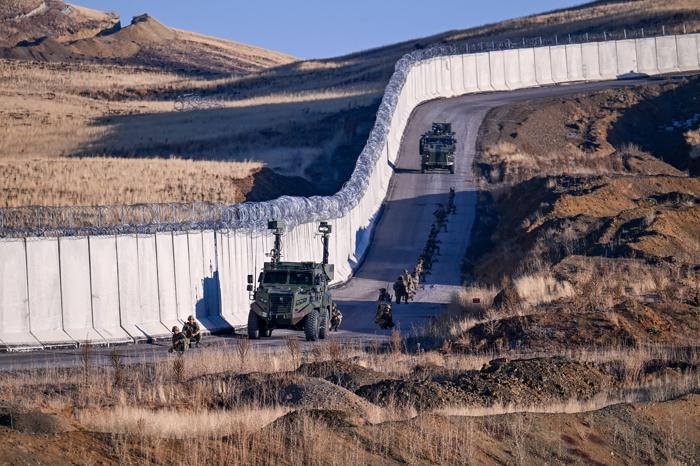
The United States is facing significant challenges in its efforts to extend its economic blockade of Iran beyond maritime routes and into the country's land borders, as neighbouring countries remain reluctant to disrupt trade and energy supplies that are essential to their economies.
Washington established Task Force Iron Gate on November 7, 2026, with approximately 20 military and civilian personnel based in Tampa, Florida. The initiative, announced by US Central Command (CENTCOM), is intended to coordinate efforts across American government agencies to prevent the movement of advanced weapons systems, dual-use technologies, sanctioned materials and alleged illicit revenue streams through Iran's land borders and the Caspian Sea.
However, the initiative faces considerable regional obstacles. Iraq, Turkiye and Pakistan have significant economic connections with Iran, making it difficult for their governments to implement extensive restrictions without damaging domestic businesses, energy supplies and border communities.
Iraq is particularly dependent on Iranian trade and natural gas. Bilateral trade between the two countries exceeded $10 billion in 2025, while Iranian gas has historically supplied a substantial share of Iraq's electricity generation. Previous border closures have also triggered concerns among traders and transport workers whose livelihoods depend on cross-border commerce.
Turkiye has similarly sought to maintain commercial relations with Tehran while navigating American sanctions. Its energy requirements and substantial bilateral trade provide Ankara with strong incentives to preserve economic connections with Iran.
Pakistan has also experienced disruptions to cross-border commerce following temporary restrictions at important crossings. Although some routes have reopened, traders continue to face challenges involving banking restrictions, customs procedures and fuel supplies.
The Caspian Sea presents another obstacle to Washington's strategy. As an enclosed body of water surrounded by five countries, it cannot be directly controlled by the United States. Any attempt to restrict Iranian commercial activity through the region would require cooperation from neighbouring states, including Kazakhstan, Turkmenistan and Azerbaijan, potentially affecting their own economic interests and relations with Russia.
Meanwhile, Tehran is seeking to strengthen alternative trade routes and regional economic partnerships to reduce the impact of American restrictions. Its commercial connections with Russia and neighbouring countries, alongside efforts to diversify import routes, could make comprehensive economic isolation more difficult.
The article also highlights the potential political purpose of Task Force Iron Gate. Beyond disrupting prohibited shipments, the initiative could reinforce Washington's pressure on Iranian political leaders, financial markets and public opinion by presenting economic isolation as an increasingly serious threat.
Nevertheless, the effectiveness of the initiative ultimately depends on whether neighbouring governments are willing to enforce American restrictions at the expense of their own economic interests.
The central challenge for Washington is therefore not simply establishing a task force or expanding sanctions, but persuading Iran's neighbours to treat their commercial and energy relationships with Tehran as expendable.
Source: https://thecradle.co/articles/iron-gate-us-border-blockade-meets-its-limits
What's Your Reaction?
 Like
0
 Dislike
0
 Love
0
 Funny
0
 Wow
0
 Sad
0
 Angry
0
Related Posts



-
 Kinguiranke
(104)
-
Nfp
(49)
-
Citoyen du monde
(30)
-
Coulibaly Yacouba
(28)
-
kan
(26)



Comments (0)