
Israel’s Far Right Set to Retain Influence Even if Netanyahu Loses Power
Israel’s far-right political movement could retain significant influence even if Benjamin Netanyahu leaves office. Bezalel Smotrich and Itamar Ben-Gvir have used their government positions to advance settlement expansion, reshape state institutions and strengthen hardline policies. Meanwhile, opposition leader Gadi Eisenkot is attempting to form a new government following the October 2026 election, although major political obstacles remain.
Israel’s Far Right Could Retain Power Beyond Netanyahu’s Leadership
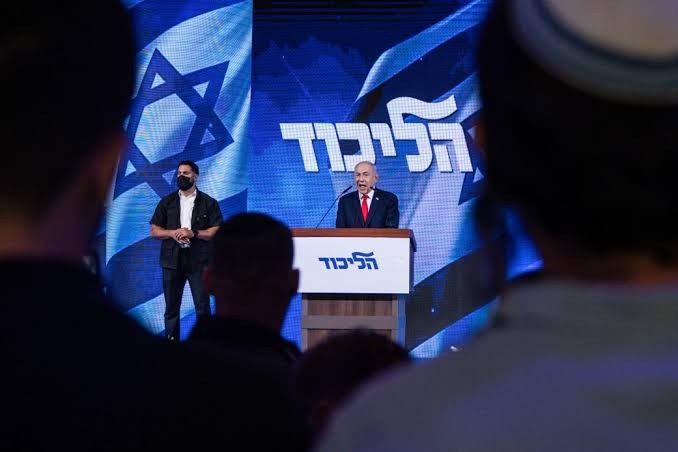
Israel’s far-right political movement could remain influential even if Prime Minister Benjamin Netanyahu loses office, as policies introduced by his coalition have become deeply embedded in government institutions, security structures and settlement administration.
The possibility of a political transition has increased following the October 27, 2026, parliamentary election, which weakened Netanyahu’s parliamentary position and gave opposition leader Gadi Eisenkot an opportunity to form a new government.
However, the political influence of Finance Minister Bezalel Smotrich and National Security Minister Itamar Ben-Gvir, along with the wider movements they represent, may prove difficult to reverse.
Both politicians have played prominent roles in advancing hardline policies towards Palestinians, expanding settlements in the occupied West Bank and reshaping key government institutions.
Netanyahu’s Coalition Strengthened the Far Right
Netanyahu formed a coalition government in 2022 that included Ben-Gvir’s Otzma Yehudit (Jewish Power) party and Smotrich’s Religious Zionist Party.
The agreement gave both politicians influential cabinet positions.
Smotrich became finance minister and received additional responsibilities within the Defence Ministry, giving him considerable influence over budget allocations and aspects of civilian administration in the occupied West Bank.
Ben-Gvir, meanwhile, was appointed national security minister, placing him in charge of the ministry overseeing the Israeli police and prison services.
Their positions allowed them to pursue political priorities extending beyond traditional ministerial responsibilities.
Both politicians have supported policies that have drawn international criticism, particularly regarding Palestinian rights, settlement expansion and the future of Gaza.
Their influence has also been reflected in repeated political confrontations within Netanyahu’s coalition, with both ministers threatening to withdraw support when government decisions appeared inconsistent with their ideological positions.
Political Differences Between Ben-Gvir and Smotrich
Although the two ministers share a hardline political outlook, their influence operates through different channels.
According to political analyst Arie Perliger of the University of Massachusetts Lowell, Ben-Gvir's political strength is largely populist and performative.
His political movement has historically benefited from presenting itself as an outsider challenging Israel's established political institutions. Consequently, moving into opposition could potentially provide him with another platform to mobilise supporters.
Smotrich, by contrast, has concentrated on using government institutions and administrative authority to advance his objectives.
His position in the Finance Ministry and his responsibilities relating to the West Bank have enabled him to influence funding, settlement administration and government policy.
This distinction could have important consequences if Netanyahu's government is replaced.
Ben-Gvir might retain a political platform outside the government, while Smotrich could lose direct access to the budgets and administrative structures that have supported his programme.
Nevertheless, neither movement is necessarily dependent on Netanyahu personally.
Settlement Expansion and Institutional Changes
One of the most significant aspects of Smotrich's political influence has been his involvement in expanding Israeli settlements across the occupied West Bank.
His additional responsibilities within the Defence Ministry gave him substantial authority over parts of the territory's civilian administration.
Under his leadership, a separate Settlement Administration was established, helping strengthen government control over settlement-related planning and development.
In August 2025, Smotrich announced the revival of the controversial E1 settlement plan near Jerusalem. He presented the initiative as a major step against the possibility of establishing an independent Palestinian state.
The settlement project has attracted international opposition because of concerns that it could divide Palestinian communities and undermine the territorial continuity needed for a future Palestinian state.
The United Nations has also documented the wider consequences of settlement expansion.
A UN Human Rights Office report published in March 2026 documented 1,732 incidents of settler violence resulting in casualties or property damage during the 12-month period ending October 31, 2025. It also reported that more than 36,000 Palestinians had been forcibly displaced amid settlement expansion and increasing violence in the occupied West Bank.
These developments illustrate the extent of the political and administrative challenges facing any future Israeli government seeking to reverse existing policies.
Ben-Gvir's Influence Over Security Institutions
Ben-Gvir has also been accused of reshaping Israel's domestic security institutions according to his political ideology.
His leadership of the National Security Ministry has raised concerns about the politicisation of the police force and changes to the prison system.
He has introduced measures affecting Palestinian prisoners, including restrictions on prison conditions and rights.
Critics argue that personnel appointments, administrative procedures and institutional changes could continue influencing these organisations long after Ben-Gvir leaves office.
Perliger has warned that reversing such changes would require sustained political commitment.
The challenge is not simply removing a minister from government. It also involves addressing the structures, policies and personnel decisions established during his time in office.
International Pressure and Sanctions
The actions of Ben-Gvir and Smotrich have attracted criticism from several Western governments.
In June 2025, the United Kingdom, Australia, Canada, New Zealand and Norway announced sanctions against both ministers over their alleged role in encouraging violence against Palestinian communities in the occupied West Bank.
The measures included asset freezes and travel restrictions.
The sanctions reflected growing international concern over settler violence and statements by senior Israeli officials regarding Palestinians and the occupied territories.
Both ministers have also faced criticism for supporting settlement expansion and policies involving the future of Gaza.
Their political positions have contributed to tensions between Israel and several Western governments, particularly those that continue to support a negotiated two-state solution.
Far-Right Movements May Survive a Change of Government
Even if Netanyahu is removed from office, the political movements supporting his government's hardline agenda are unlikely to disappear.
Roi Zur, an assistant professor at the University of Essex, has argued that Smotrich's Religious Zionist movement and Ben-Gvir's Otzma Yehudit have established a stable electoral base.
Together, the movements have been estimated to attract support from approximately 10 percent of Israeli voters.
Their appeal is rooted in political and ideological currents that extend beyond the current government.
The Religious Zionist movement has historical roots dating back to the period following the 1967 war, while Ben-Gvir's political background is associated with the Kahanist movement.
This suggests that excluding their representatives from cabinet positions would not necessarily eliminate their influence over Israeli politics.
Their supporters could continue shaping political debates, influencing coalition negotiations and opposing attempts to reverse existing policies.
Eisenkot Faces a Difficult Path to Forming a Government
The October 27 election has created a new political challenge for Netanyahu.
His Likud-led alliance secured 53 seats in the 120-member Knesset, while the opposition bloc led by Gadi Eisenkot's Yashar party secured 48. Arab-led parties won the remaining 19 seats.
Although Netanyahu's alliance remained the largest parliamentary bloc, it fell short of the 61 seats required for a governing majority.
President Isaac Herzog subsequently tasked Eisenkot with attempting to form a government.
However, the opposition leader faces considerable obstacles, including disagreements over potential cooperation with Arab-led parties and difficulties securing support from ultra-Orthodox political factions.
The newly elected parliament was sworn in on November 10, while Netanyahu remained caretaker prime minister.
Eisenkot's allies have already introduced legislative proposals seeking an official inquiry into the October 7, 2023, Hamas-led attacks, limits on prime ministerial terms and changes to judicial reforms introduced under Netanyahu's government.
Nevertheless, forming a governing coalition remains uncertain.
Political Change May Not Reverse Existing Policies
The potential departure of Netanyahu would represent a significant development in Israeli politics, but it would not automatically dismantle the political and institutional structures strengthened during his years in power.
Settlement administration, security policies, government appointments and the influence of established political movements could continue shaping the country's direction.
For Palestinians, the central concern is whether a new government would be willing and able to reverse policies that have contributed to settlement expansion, displacement and restrictions on their rights.
For Israel, the challenge involves determining whether a change in political leadership will also produce meaningful changes in the institutions and policies governing the country.
The outcome of the coalition negotiations may determine who leads Israel next. However, the influence of the far right is likely to remain an important factor in the country's political future, regardless of whether Netanyahu retains the premiership.
What's Your Reaction?
 Like
0
 Dislike
0
 Love
0
 Funny
0
 Wow
0
 Sad
0
 Angry
0

Related Posts


-
 Kinguiranke
(103)
-
Nfp
(55)
-
Kankan
(33)
-
Citoyen du monde
(31)
-
Coulibaly Yacouba
(27)






Comments (0)