Ukraine's EU Membership Prospects Face Growing Obstacles as War Continues
Ukraine's ambition to join the European Union is facing mounting political, economic and public opposition as Russia's war continues. Concerns over agricultural competition, corruption, financial costs and declining public support are complicating Kyiv's accession ambitions.
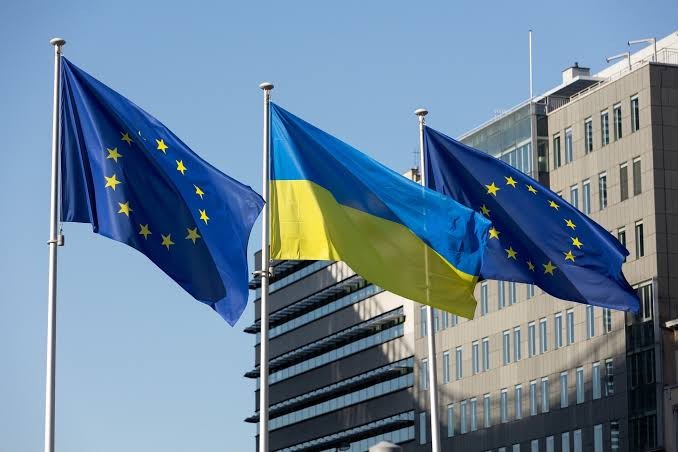
Ukraine's ambition to become a member of the European Union is encountering growing resistance as the war with Russia continues, with political disagreements, economic concerns and declining public support creating fresh obstacles to its accession.
Although several European leaders have expressed support for Ukraine's eventual membership, concerns among EU governments and their populations suggest that the country could face a considerably longer path towards joining the 27-member bloc.
The challenges extend beyond the consequences of the war. Agricultural competition, financial commitments, institutional reforms and the increasing influence of populist political parties are also complicating Kyiv's European ambitions.
Declining Public Support Across Europe
Public enthusiasm for Ukraine's EU membership has weakened considerably since Russia launched its full-scale invasion in February 2022.
According to an October 2026 survey published by the Bertelsmann Stiftung, only 47% of EU residents support Ukraine joining the bloc in the coming years. This represents a significant decline from 69% recorded in March 2022.
Opposition is particularly strong in several influential European countries. The survey found that 57% of respondents in both France and Poland opposed Ukraine's membership in the coming years. In Germany, opposition reached 59%.
The changing public mood presents an additional challenge for European governments seeking to maintain political support for Ukraine while managing domestic economic and political concerns.
In eastern Poland, farmer Miroslaw Halej, who initially helped Ukrainian refugees arriving after the invasion, said his attitude had changed as the conflict continued.
The 63-year-old farmer, who grows wheat, sugar beets, rapeseed and beans near the Ukrainian border, has participated in protests against Ukrainian agricultural imports.
He fears that allowing Ukrainian agricultural products unrestricted access to European markets could push down prices and make it increasingly difficult for Polish farmers to compete.
Agricultural Competition Creates Economic Concerns
Ukraine's agricultural sector is among the largest in Europe, and its relatively low production costs have raised concerns among farmers in existing EU member states.
Polish agricultural communities are particularly worried that Ukrainian grain and other agricultural products could increase competition, putting pressure on domestic prices and farmers' incomes.
The issue has become politically sensitive because EU membership would eventually provide Ukraine with access to the bloc's single market, subject to negotiated conditions and possible transitional arrangements.
Agriculture is also central to the concerns raised by far-right politicians in France and Germany.
Marine Le Pen, a prominent French political figure, has warned that Ukrainian membership could expose French farmers to unfair competition while reducing the country's share of European agricultural subsidies.
Germany's Alternative for Germany party has also opposed Ukraine's accession ambitions, submitting a parliamentary motion calling for the government to rule out membership.
Ukraine's large population and agricultural capacity could significantly influence the EU's economic and political balance.
Political Opposition Complicates Ukraine's Accession
Ukraine's membership application requires support from all 27 EU member states, making opposition from even a single government a potential obstacle.
The accession process involves extensive negotiations, legal reforms and alignment with European standards. Candidate countries must demonstrate progress in areas including democratic governance, judicial independence, economic stability and the rule of law.
Ukraine faces additional difficulties because of the uncertainty surrounding the war, longstanding corruption concerns and the administrative challenges associated with integrating a country of its size.
France could also become an important political obstacle, as a referendum on Ukraine's membership bid is considered likely.
Several European diplomats have expressed doubts about Ukraine joining the bloc in the near future, particularly as multiple national elections are expected to compete for political attention.
However, Ukrainian officials maintain that membership would benefit the entire European Union.
Foreign Ministry spokesperson Heorhii Tykhyi has argued that Ukraine's military capabilities, including its experience in modern warfare, would strengthen Europe's security.
Ukraine has also presented its membership ambitions as part of a broader effort to establish a lasting political and economic separation from Moscow's influence.
European Union Explores Alternative Integration Options
Recognising the difficulties surrounding rapid enlargement, European governments and institutions are considering alternative approaches that could bring Ukraine closer to the bloc before full membership becomes possible.
German Chancellor Friedrich Merz has proposed an associate membership arrangement that would allow Ukrainian representatives to participate in EU summits and ministerial meetings without receiving voting rights.
However, Kyiv has criticised the proposal, arguing that participation without decision-making powers would leave Ukraine without a meaningful voice in European affairs.
The European Commission has also explored a gradual integration approach that would allow candidate countries to participate in selected EU programmes and economic sectors after meeting specific requirements.
These areas include energy, transport, digital infrastructure and defence cooperation.
Another proposal involves introducing safeguards and restrictions on access to European markets for sensitive Ukrainian agricultural products.
Such arrangements could help address concerns among European farmers while allowing Ukraine to develop closer economic relationships with the bloc.
For some Polish agricultural communities, restrictions on agricultural imports could make eventual Ukrainian membership more acceptable.
Ukraine's Security Argument for EU Membership
Despite the political and economic difficulties, Ukraine continues to view EU membership as a major strategic objective.
The prospect of joining the bloc could provide Kyiv with a significant geopolitical achievement following the end of the war.
With the United States opposing Ukraine's NATO membership ambitions, European integration has become increasingly important to the country's long-term security and political strategy.
Supporters of enlargement, particularly in the Baltic countries, argue that Ukraine's military experience and defence capabilities could strengthen Europe's ability to respond to future security threats.
Some communities along the Polish-Ukrainian border also believe that closer integration could improve regional security and economic cooperation.
However, local political leaders have emphasised that membership must involve arrangements that protect existing EU members from disproportionate financial and economic pressures.
A Long Road Ahead for Ukraine
Ukraine's EU accession ambitions remain alive, but the political environment surrounding enlargement has become increasingly complicated.
Although accession negotiations have advanced, including the opening of additional negotiating clusters in October 2026, progress through the process does not guarantee eventual membership within a specific timeframe.
The country must continue implementing democratic, judicial and economic reforms while addressing concerns among existing EU members.
At the same time, European governments must balance support for Ukraine with domestic political pressures, agricultural interests and questions about the financial implications of enlargement.
For Kyiv, the challenge will be to demonstrate that its membership would strengthen the European Union while convincing sceptical governments and citizens that the economic and political costs can be managed.
With the war continuing and opposition growing in several influential member states, Ukraine's journey towards EU membership could prove considerably longer and more complicated than initially anticipated.
What's Your Reaction?
 Like
0
 Dislike
0
 Love
0
 Funny
0
 Wow
0
 Sad
0
 Angry
0

Related Posts
-
 Kinguiranke
(103)
-
Nfp
(55)
-
Kankan
(33)
-
Citoyen du monde
(31)
-
Coulibaly Yacouba
(27)

Comments (0)