
The world’s most dangerous U.N. mission : The al-Qaeda threat in Mali presents a new challenge to U.N. peacekeepers
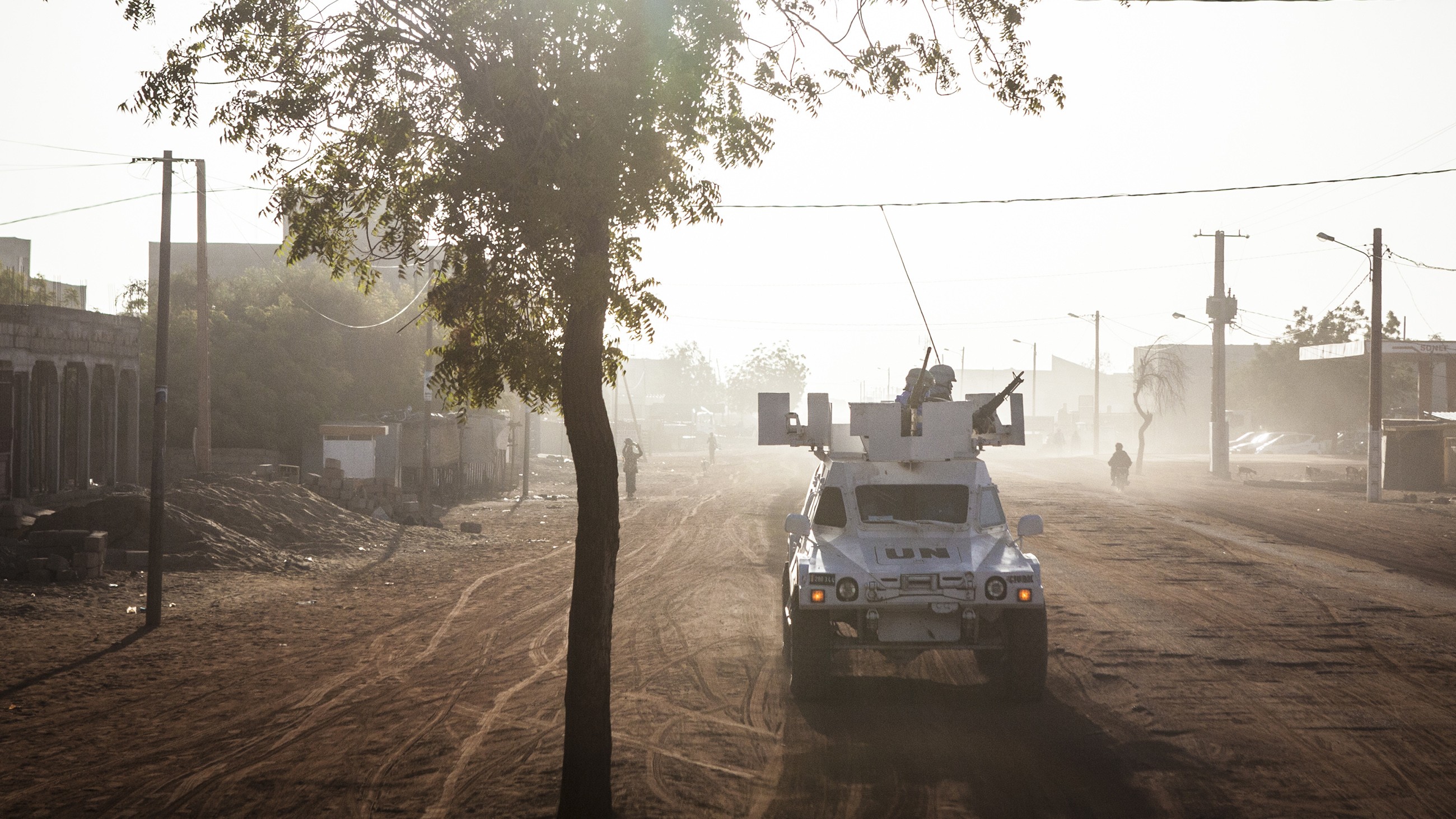
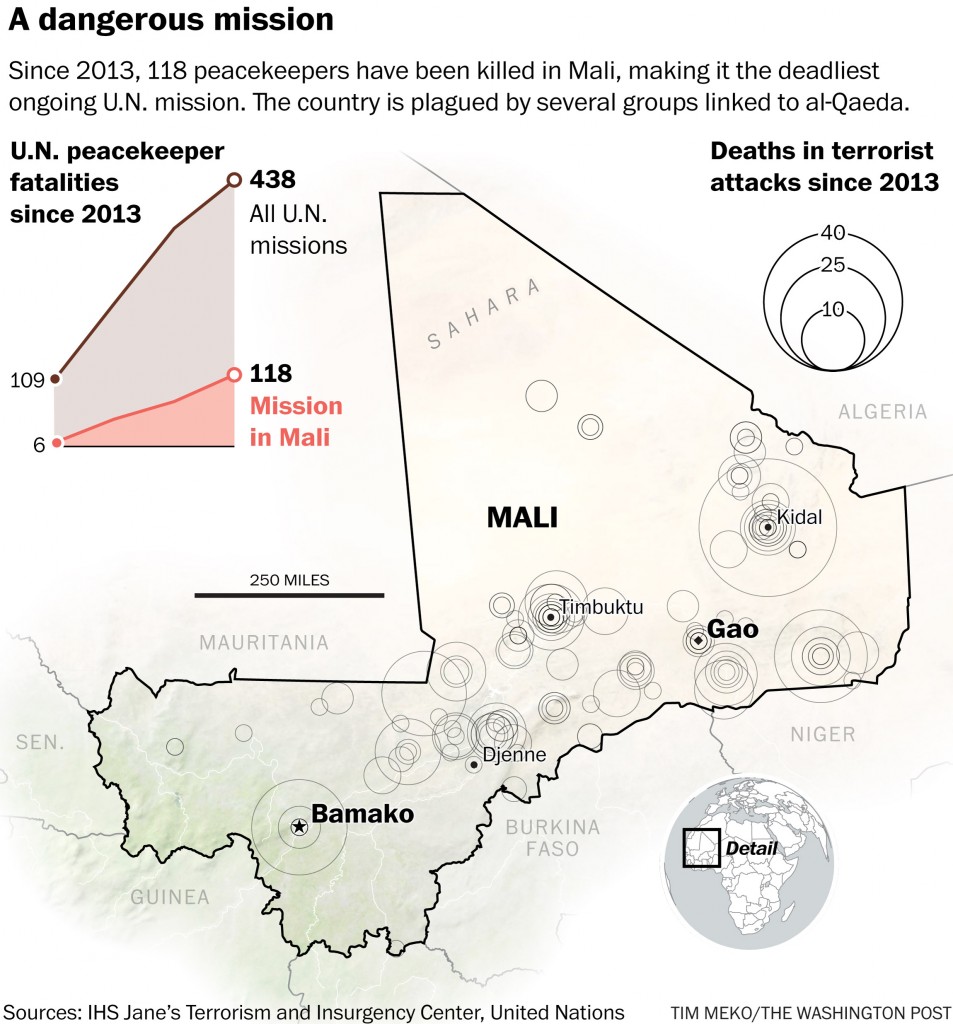
Since World War II, U.N. peacekeepers have been dispatched to 69 conflicts — civil wars, border disputes and failed states. But now they are confronting an unsettling new threat: al-Qaeda.
 A U.N. police officer stands guard on a night patrol in the northern city of Timbuktu. The U.N. mission in Mali marks the first time a significant peacekeeping contingent has been sent to help a state regain control over areas contested by terrorist groups.[/caption]
The United Nations was remarkably unprepared for the threat. Most of its troops from Africa and South Asia brought tanks and vehicles that were easy targets for explosives, unlike U.S. mine-resistant vehicles. The U.N. compounds, dotted with metal storage containers turned into offices and bedrooms, had flimsy perimeter security and were vulnerable to the massive car bombs used by al-Qaeda in the Islamic Maghreb (AQIM), the regional affiliate of the extremist group. For a while, U.N. forces didn’t have a single attack helicopter.
“We weren’t ready for these challenges,” said Mohamed El-Amine Souef, a native of the Comoros Islands who is the top U.N. official in Gao, a city in northern Mali. Last year, Souef’s compound was struck by a suicide bomber, the shrapnel battering his front door.
But the United Nations’ dilemma goes beyond a lack of preparation or anti-terrorism equipment. At its New York headquarters and around the world, diplomats are debating: Should U.N. forces be engaged in counterterrorism at all?
“It’s time for us to realize that this kind of front-line role is central to the future of the United Nations,” said Peter Yeo, a senior official at the U.N. Foundation, a Washington-based nonprofit organization that supports the goals of the world body.
Yeo and others argue that without a counterterrorism capability, U.N. peacekeepers can’t operate productively in many of the world’s war zones.
But critics say that such a role would violate the peacekeepers’ core principle of impartiality and ultimately make them less effective.
“Peacekeepers are only meant to use deadly force to protect civilians or to stop spoilers from threatening a peace process, not to pursue any group’s military defeat,” said Aditi Gorur, director of the Protecting Civilians in Conflict program at the Stimson Center, a Washington-based research center.
A U.N. police officer stands guard on a night patrol in the northern city of Timbuktu. The U.N. mission in Mali marks the first time a significant peacekeeping contingent has been sent to help a state regain control over areas contested by terrorist groups.[/caption]
The United Nations was remarkably unprepared for the threat. Most of its troops from Africa and South Asia brought tanks and vehicles that were easy targets for explosives, unlike U.S. mine-resistant vehicles. The U.N. compounds, dotted with metal storage containers turned into offices and bedrooms, had flimsy perimeter security and were vulnerable to the massive car bombs used by al-Qaeda in the Islamic Maghreb (AQIM), the regional affiliate of the extremist group. For a while, U.N. forces didn’t have a single attack helicopter.
“We weren’t ready for these challenges,” said Mohamed El-Amine Souef, a native of the Comoros Islands who is the top U.N. official in Gao, a city in northern Mali. Last year, Souef’s compound was struck by a suicide bomber, the shrapnel battering his front door.
But the United Nations’ dilemma goes beyond a lack of preparation or anti-terrorism equipment. At its New York headquarters and around the world, diplomats are debating: Should U.N. forces be engaged in counterterrorism at all?
“It’s time for us to realize that this kind of front-line role is central to the future of the United Nations,” said Peter Yeo, a senior official at the U.N. Foundation, a Washington-based nonprofit organization that supports the goals of the world body.
Yeo and others argue that without a counterterrorism capability, U.N. peacekeepers can’t operate productively in many of the world’s war zones.
But critics say that such a role would violate the peacekeepers’ core principle of impartiality and ultimately make them less effective.
“Peacekeepers are only meant to use deadly force to protect civilians or to stop spoilers from threatening a peace process, not to pursue any group’s military defeat,” said Aditi Gorur, director of the Protecting Civilians in Conflict program at the Stimson Center, a Washington-based research center.
If peacekeepers had a more aggressive counterterrorism mandate, she and others argue, that could hurt the United Nations’ ability to mediate between warring groups, which sometimes include violent Islamists.
Already in Mali, the International Committee of the Red Cross has described the United Nations as a “party to the conflict.”
In the slide-show presentation he shows to visitors at his base in Bamako, the capital of Mali, Kerkhove includes an aerial photo taken last year of a compound that appeared to be used by a terrorist group. When he received the photo, Kerkhove debated what to do.
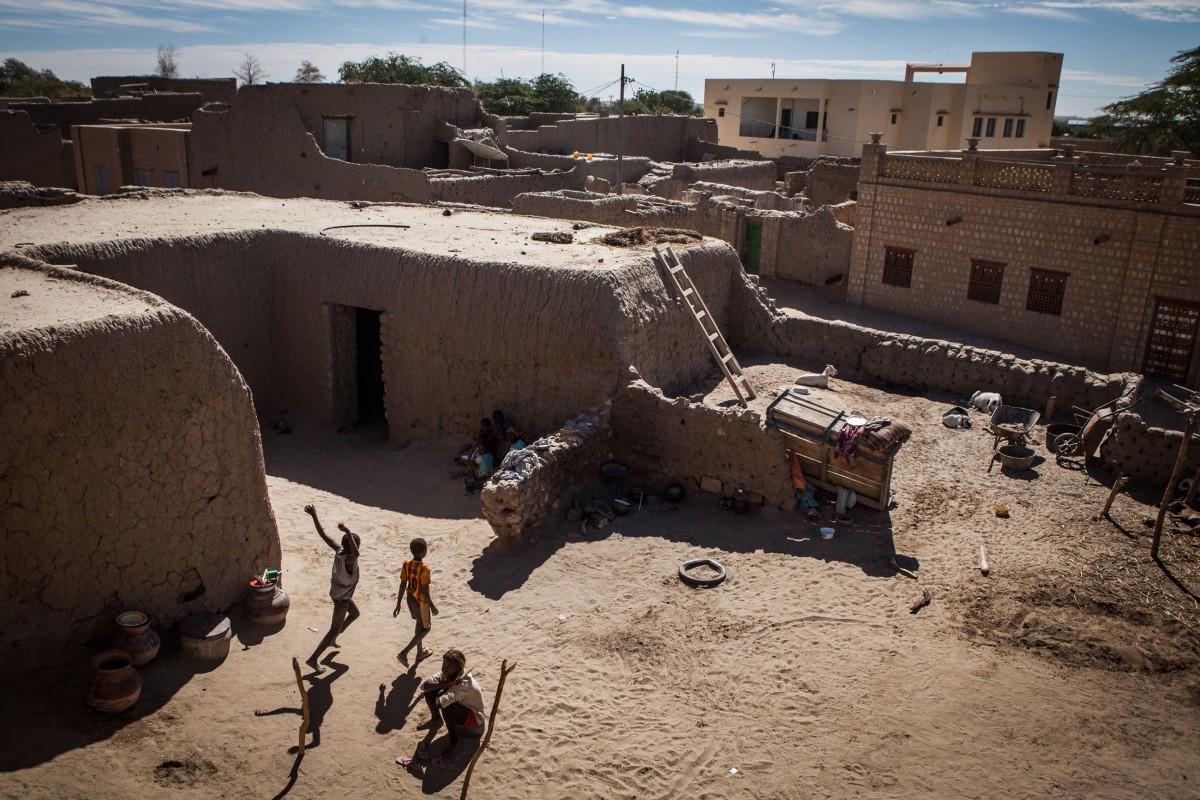
In a review in 2015, a panel of U.N.-appointed experts said that peacekeeping forces were “not the appropriate tool for military counterterrorism operations.” But it noted they do deploy in areas threatened by armed extremist groups “and must be capable of operating effectively and as safely as possible therein.” On their patrols through the sandy side streets of Gao, an ancient city along the Niger River lined with mud-brick houses, U.N. convoys are greeted by throngs of residents. The locals always have the same complaint, said Senegalese Capt. Diagne Meth, standing outside his armored personnel carrier during one patrol: “They want us to do more.” Specifically, he said, they ask for more offensive operations, targeting radical Islamists as well as criminal groups.
“But I have to tell them, ‘That’s not what we’re here to do,’ ” Meth said.
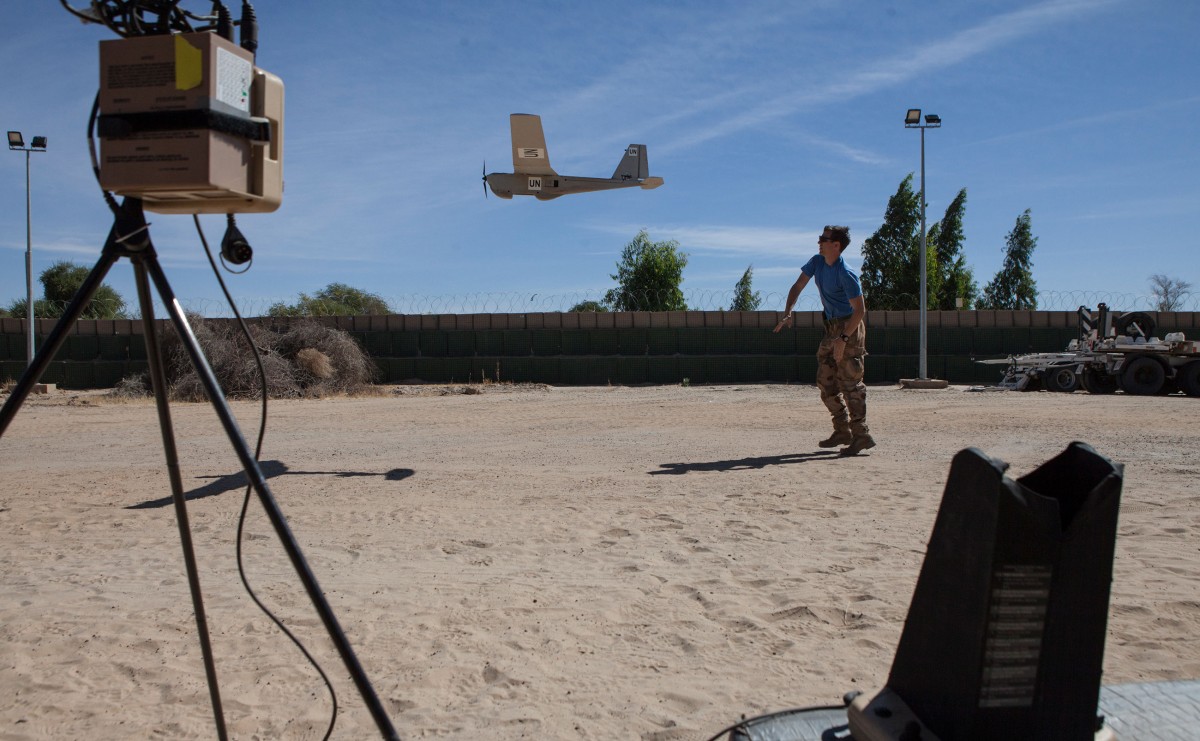
Already, the United Nations has tried to adapt in Mali. It has a fleet of surveillance drones. It has the first U.N. intelligence cell, a Bamako-based unit with analysts spread across the country. It has counter-IED specialists. It also has thousands of European troops, including large contingents from Germany, the Netherlands and Sweden, with soldiers experienced in fighting in Afghanistan.
Other U.N. missions have evolved in recognition of new threats. In Congo in 2013, for example, the United Nations launched its first brigade designed for offensive operations. But the terrorism threat in Mali sets it apart. “Sending out a patrol might work to deter an armed group in the Congo from engaging in violence, but it has the opposite effect in Mali, where terrorists are specifically trying to target peacekeepers,” said Gorur, of the Stimson Center.[caption id="attachment_2065022" align="aligncenter" width="1200"]
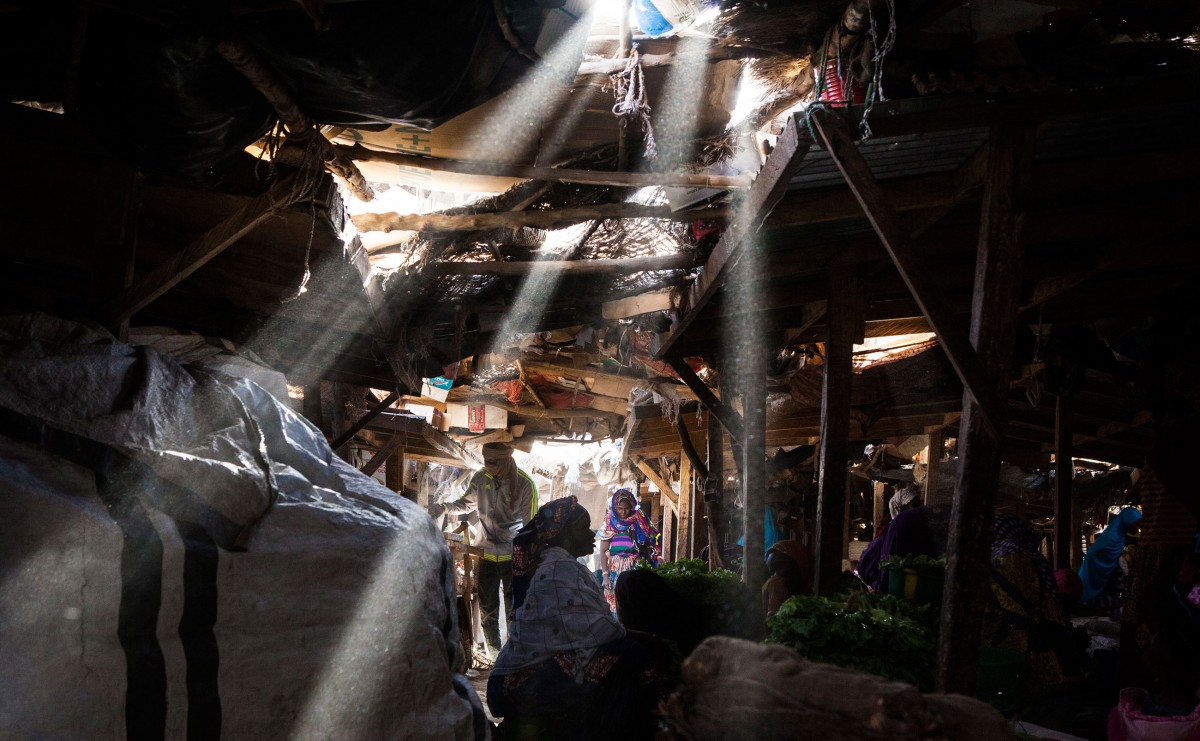 Market stalls are set up as shoppers buy goods in Gao, an ancient city along the Niger River.[/caption]
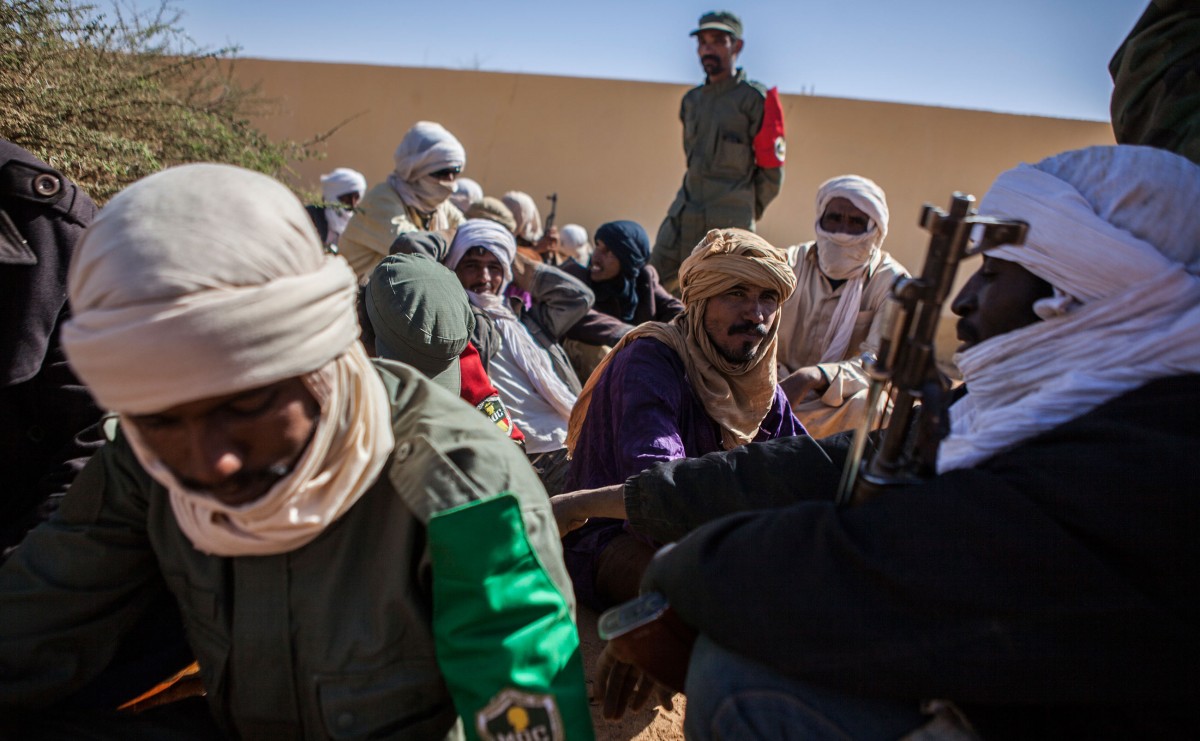
More than a year and a half ago, Mali’s government signed a peace deal with separatist rebels in the north from the Tuareg and Arab communities. Authorities hoped the radical Islamists who had once aligned themselves with the local rebels — and later fallen out — had been driven away. But today, the terrorists appear stronger than ever.
The French military continues to conduct its own counterterrorism mission across northwest Africa, including in Mali. The United Nations shares information with the French if it is deemed useful for protecting the lives of troops.
On Jan. 18, Islamist extremists drove a truck laden with explosives into a compound in Gao where the United Nations was protecting Malian forces. Seventy-six men — from national forces and armed groups that had joined the peace process — lost their lives in the blast. (No peacekeepers were killed.) The attack was claimed by al-Qaeda in the Islamic Maghreb, which said it involved one of its allies, al-Mourabitoun.
The explosion was staggering, but so was the lack of security at an installation ostensibly protected by peacekeepers. Three days before the attack, a visiting Washington Post reporter saw only a few Bangladeshi peacekeepers sitting inside a personnel carrier outside the compound. Terrorist groups had already struck U.N. facilities in the city several times, but the base was protected by only a flimsy metal gate. Souef, the U.N. official, acknowledged that his own compound in the city was vulnerable. “We shouldn’t be living in a place like this,” he said.[caption id="attachment_2065032" align="aligncenter" width="1200"]
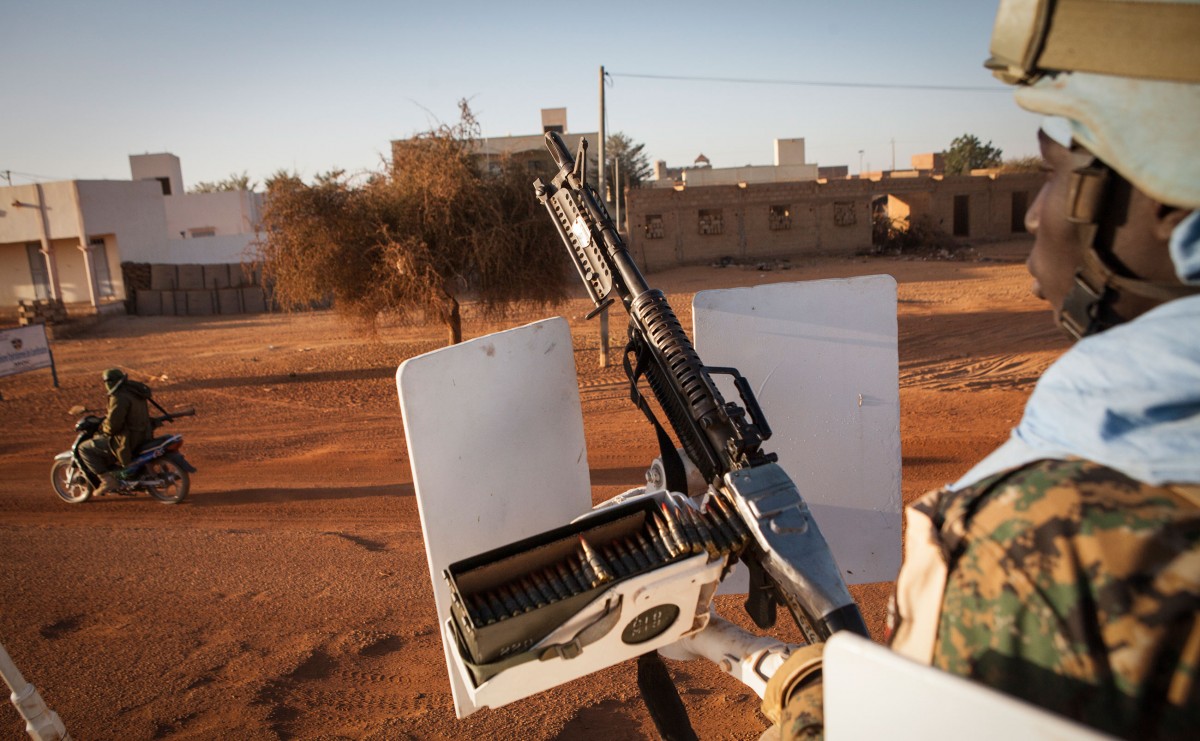
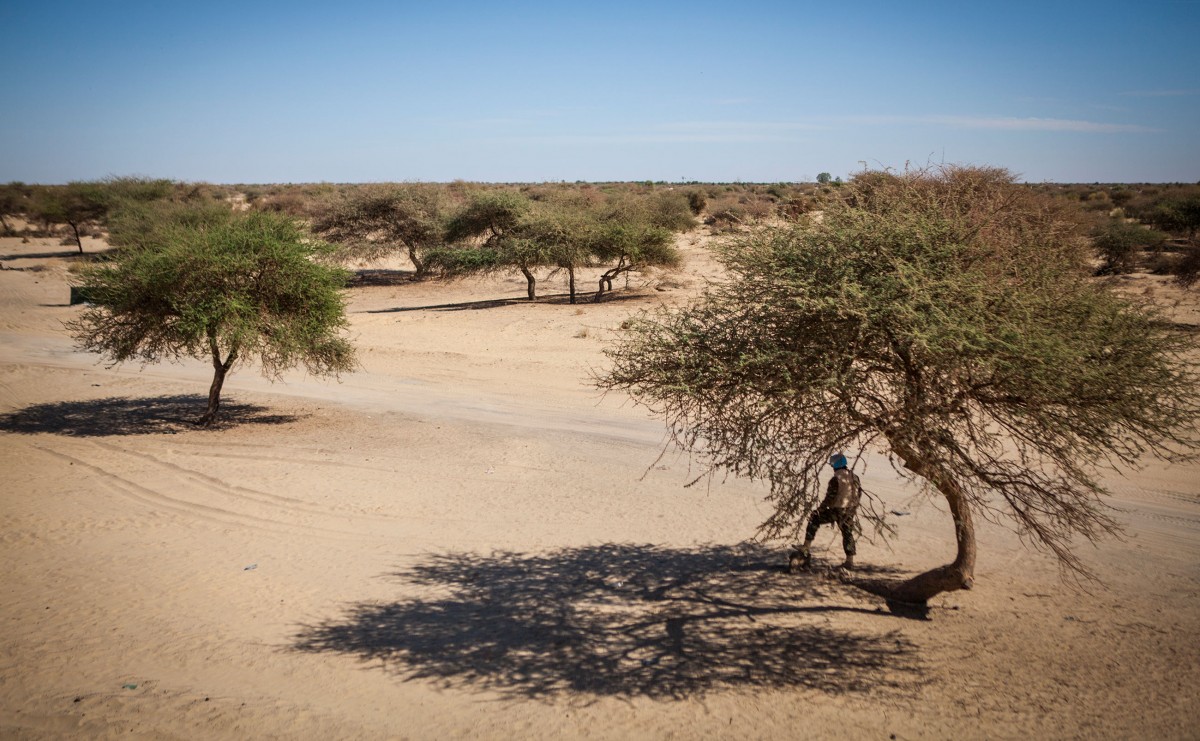 A U.N. peacekeeper stands near a FAMA (Armed Forces of Mali) checkpoint on the outskirts of Timbuktu.[/caption]
Story by Kevin Sieff Photos by Jane Hahn Published on February 17, 2017
CORRECTION: An earlier version of this article incorrectly said that the U.N. peacekeeping mission in Mali, known as MINUSMA, is the deadliest ever. MINUSMA has the highest death toll for an ongoing operation, but more peacekeepers were killed in the 1991-’95 U.N. mission in the former Yugoslavia, or UNPROFOR. The article has been updated.
Quelle est votre réaction ?
 Like
0
Like
0
 Je kiff pas
0
Je kiff pas
0
 Je kiff
0
Je kiff
0
 Drôle
0
Drôle
0
 Ouah
0
Ouah
0
 Triste
0
Triste
0
 Hmmm
0
Hmmm
0

Articles Similaires
-
 Kinguiranke
(121)
Kinguiranke
(121)
-
Nfp
(92)
-
Kankan
(49)
-
Pnf
(32)
-
Coulibaly Yacouba
(15)









Commentaires (20)